Saturday, September 10, 2005
I've seen that face somewhere before...
Opened the 'Rise' section of the 'Guardian today' and saw a mugshot of our own aj! I hope they paid an appearance fee.


Thursday, September 08, 2005
Forthcoming events: September rounds
After a rather quiet August in London when all the activity seems to head north of Hadrian's Wall, London is buzzing with events again.
The Dana Centre (behind the Science Museum) is hosting a mini series of events on pregnancy and childbirth. It kicks off on 13 September at 19.00 with 'Unwanted Pregnancies: the evolution of abortion'. On 14 September, 18.30, there is an opportunity to play the much-hyped Democs card game. The game aims to stimulate debate on controversial science-based issues, in this case stem-cell research: more details here. There is a discussion on mental health on 15 September, entitled 'Is it You or I Who Should Be in the Asylum?' (there is something decidedly iffy about the grammar in that title). This event will be webcast here. Things are bound to get heated on 21 September when the topic for discussion will be 'Too posh to push?' on the role of elective caeareans in childbirth. If it all sounds a bit heavy, some light relief is scheduled on 28 September, 19.00, when Y Touring Theatre presents a play about memory called 'Mind the Gap'. On 29 September, 18.30, Full Beam Visual Theatre are putting on 'The Man Who Discovered That Women Lay Eggs' billed as the 'epic and comic story of how man finally unravelled the truth about his own origins in 1827'.
Over at the Royal Institution, in the hallowed Faraday lecture theatre, there are also a number of events that look interesting. On 27 September, 19.00, there is a lecture rather unimaginatively entitled, 'Processing of visual information' by Michael Brady and VS Ramachandran. There is a talk on 'Perspectives on our ageing world' on 29 September at 19.00. Worth booking tickets for in advance, I suspect, is 'Anatomy for the terrified!!!' by Susie Whiten on 11 October at 19.00. An 'evening of wonder' is promised. Can it live up to all those exclamation marks without being puerile or patronising? Tickets for all RI events cost £8 (concessions £5).
The Hunterian Museum, London, is running an autumn lecture series called 'Surgeons at War: Trafalgar to Tikrit'. It includes talks on medicine and surgery in the Crimea, plastic surgery after the WWII, and life in a field hospital. On 28 September, 18.30, there is a free talk by Fiona MacNeill, 'Breasts Laid Bare', 'ic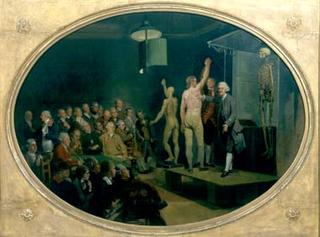 onography and history of breasts and the treatment of breast cancer through the ages'.
On in Edinburgh at the Scottish National Portrait Gallery until 27 November, is an exhibition 'The Healing Touch' which examines the role of Scottish men and women in medicine. It coincides with the quincentenary of the Royal College of Surgeons of Edinburgh. Shown here is Johann Zoffany's painting, 'William Hunter lecturing at the Royal Academy'.
As usual, if anyone makes it to one of these events, we'd love to hear about it.
The Dana Centre (behind the Science Museum) is hosting a mini series of events on pregnancy and childbirth. It kicks off on 13 September at 19.00 with 'Unwanted Pregnancies: the evolution of abortion'. On 14 September, 18.30, there is an opportunity to play the much-hyped Democs card game. The game aims to stimulate debate on controversial science-based issues, in this case stem-cell research: more details here. There is a discussion on mental health on 15 September, entitled 'Is it You or I Who Should Be in the Asylum?' (there is something decidedly iffy about the grammar in that title). This event will be webcast here. Things are bound to get heated on 21 September when the topic for discussion will be 'Too posh to push?' on the role of elective caeareans in childbirth. If it all sounds a bit heavy, some light relief is scheduled on 28 September, 19.00, when Y Touring Theatre presents a play about memory called 'Mind the Gap'. On 29 September, 18.30, Full Beam Visual Theatre are putting on 'The Man Who Discovered That Women Lay Eggs' billed as the 'epic and comic story of how man finally unravelled the truth about his own origins in 1827'.

Over at the Royal Institution, in the hallowed Faraday lecture theatre, there are also a number of events that look interesting. On 27 September, 19.00, there is a lecture rather unimaginatively entitled, 'Processing of visual information' by Michael Brady and VS Ramachandran. There is a talk on 'Perspectives on our ageing world' on 29 September at 19.00. Worth booking tickets for in advance, I suspect, is 'Anatomy for the terrified!!!' by Susie Whiten on 11 October at 19.00. An 'evening of wonder' is promised. Can it live up to all those exclamation marks without being puerile or patronising? Tickets for all RI events cost £8 (concessions £5).
The Hunterian Museum, London, is running an autumn lecture series called 'Surgeons at War: Trafalgar to Tikrit'. It includes talks on medicine and surgery in the Crimea, plastic surgery after the WWII, and life in a field hospital. On 28 September, 18.30, there is a free talk by Fiona MacNeill, 'Breasts Laid Bare', 'ic
 onography and history of breasts and the treatment of breast cancer through the ages'.
On in Edinburgh at the Scottish National Portrait Gallery until 27 November, is an exhibition 'The Healing Touch' which examines the role of Scottish men and women in medicine. It coincides with the quincentenary of the Royal College of Surgeons of Edinburgh. Shown here is Johann Zoffany's painting, 'William Hunter lecturing at the Royal Academy'.
As usual, if anyone makes it to one of these events, we'd love to hear about it.
When You Cure Me
 The Bush Theatre is running a 'Tainted Love' season this autumn and one of the featured plays is called 'When You Cure Me' by Jack Thorne, directed by Mike Bradwell. It runs from the 16th November - 17 December 2005, tickets are £14 (£9.50 for students).
The blurb says: "Rachel and Peter have been going out for 6 months. Then Rachel gets ill. She doesn't want her mum to fuss, she doesn't want Alice to be her new best friend, and she certainly doesn't want James to tell bad jokes. The only person she wants is Peter. Peter doesn't know what he wants, but he thinks he can make her better again. When You Cure Me is a bittersweet tale of love and misunderstanding, and discovering that what we say and do can be different from what we think and feel."
A possibility for our arts-based outing for the Purple Coat Club?
Monday, September 05, 2005
Heart-felt dance
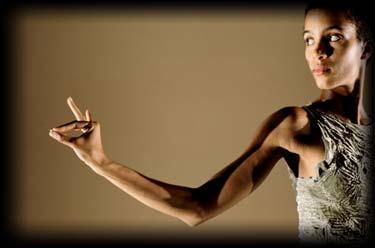 'Amu' is a dance work devoted to the heart. Created by Random Dance, it's premiering at Sadler's Wells. It was created in collaboration with heart-imaging specialists. Performances take place at 7.30 pm, from 15 to 17 September. Click here for more information. I am tempted to go, if only to see if it lives up to the promise, made in the billing, of 'questioning both the physical functions and symbolic resonances of the human heart'. As far as I know the physical function of the heart has beyond question for a considerable time, but I'm always happy to be proved wrong!
Sunday, September 04, 2005
Before I Say Goodbye - Review

I did well to save my first tear until page 82 of this short (116 page) book. A beautiful yet terrible précis of the last few months of journalist Ruth Picardie's life, her strong sense of bravado and utter acceptance of her death mark it a unique read; moving, funny, awfully sad.
The book starts out as a collection of Ruth's e-mails to friends, and their responses. Gradually these become interspersed with Ruth's column in the 'Life' supplement of The Observer, which chronicles her cancer experiences in a brief, punchy style. With a surprising audacity she tackles issues of enormous emotional importance, capturing the whirlwind nature of her illness; discovery, chaotic spread, failure of both conventional and unconventional treatments, complications, the idea of her own death.
Abruptly, her column becomes a shadow of the strong, forthright memoir we are accustomed to: we learn that Ruth has in fact been admitted to a hospice. All the while we have been thriving from the strength of her column - the seeming invincibility means that we never really believed it was so bad. But it was. Then the shock hits - she is intractably ill and the column is no more. Indeed, her sister Justine closes the column in the final entry, explaining the turn of events.
After the first column, various letters from Ruth's readers are included in the book. In general, most write to share their own experience of cancer and to impart some morsel of advice or simply to lend their support. They focus on Ruth's dilemma of leaving her twin toddlers - how to create a lasting memory of their mother, who had been ill with cancer for half of their lives. The letters are immensely moving and poignant; most of those that pen them seem afraid that Ruth might find them too mushy, but as readers we are quite sure she valued and embraced every one.
Justine writes the final 'Before I Say Goodbye' column. Ruth has died, earlier than expected. But her last few emails were not the brazen, self-deprecant humour of the past; instead brief poorly punctuated messages - the decline is clear.
The book ends with a chapter by Matt Seaton, Ruth's partner and 'coparent'. He frankly discusses the unfortunate complications Ruth suffered before her death - her brain metastases involved her frontal lobe, meaning she experienced confusion, aggression, a lack of inhibition, and became stuck in repetitive thought cycles. We realise how attached we have become to Ruth, simply from reading her emails, as we witness her spiralling descent towards the inevitable end.
The book closes on Matt's handling of the end. He acts in a way some might perceive to be a little coarse - deciding not to be present at the moment of Ruth's death, and to take the twins to the hospice to see their mother's body - but I certainly sympathised with his logic. He believed the twins would not have a definitive idea that their mother was dead without the tangible concept of death via a corpse. A little raw perhaps, but conceivably important for Ruth to live on in her children's young minds.
The letters Ruth writes to her children are included in the book, as scanned copies. This is very powerful - the handwriting is so much more personal than the book's e-mail typeface, and her crossings-out and insertions are unedited. The letters are dear and bittersweet, and although there are hints of Ruth's mental involvement, they are example of pure maternal devotion and love.
I heartily recommend this book for its wonderful insight into a tragic world. It is a brief read that is more inspirational than depressing and makes one consider death in a different light. 10 pence from every copy goes to The Lavender Trust, a charity set up by Ruth Picardie and Beth Wagstaff to provide better support for breast cancer sufferers, something that Ruth felt lacking in her experiences. An important book.
Saturday, September 03, 2005
Foetus Snatcher
Channel 4 is currently running a 'Psycho' season and on Tuesday 6th September will be broadcasting 'The Foetus Snatcher' at 10pm, a documentary about the phenomenon of women who steal unborn children from their mothers.
The write-up in The Telegraph's Televison and Radio supplement tells of a near-term mother who was strangled with her foetal heart monitor cord, subjected to a crude caesarean - her attacker using car keys and biting through the umbilical cord - and left dead, with her living baby taken. There have since been several similar instances in the States.
It will be interesting to see how such a topic is handled by Channel 4, who have produced some high quality health-related documentaries recently. Review to follow.
Although I didn't manage to catch it, also in the series was The Sperminator on Tuesday 30th August, also at 10pm. This documentary dealt with a cowboy fertility doctor who provided his own semen samples to his unwitting patients and is believed to have fathered 75 children in this way. Unbelievably, he is also apparently the doctor to have pioneered amniocentesis, a procedure where amniotic fluid is sample as a diagnostic procedure during pregnancy.
All in all 'The Psycho' season seems worth watching, if you can abide the grisly nature of the topics handled. Did anyone else catch any others in the series?
The write-up in The Telegraph's Televison and Radio supplement tells of a near-term mother who was strangled with her foetal heart monitor cord, subjected to a crude caesarean - her attacker using car keys and biting through the umbilical cord - and left dead, with her living baby taken. There have since been several similar instances in the States.
It will be interesting to see how such a topic is handled by Channel 4, who have produced some high quality health-related documentaries recently. Review to follow.
Although I didn't manage to catch it, also in the series was The Sperminator on Tuesday 30th August, also at 10pm. This documentary dealt with a cowboy fertility doctor who provided his own semen samples to his unwitting patients and is believed to have fathered 75 children in this way. Unbelievably, he is also apparently the doctor to have pioneered amniocentesis, a procedure where amniotic fluid is sample as a diagnostic procedure during pregnancy.
All in all 'The Psycho' season seems worth watching, if you can abide the grisly nature of the topics handled. Did anyone else catch any others in the series?
The Curious Incident of the Alternative Review
I found this review of 'The Curious Incident of the Dog in the Night-Time' by Mark Haddon today in the student BMJ, written by an Imperial Medic colleague named David Ellis back in February 2004.
It relates to my original post in June about C4's 'Make Me Normal' programme in their 'Only Human' season, about a school for autistic children.
It relates to my original post in June about C4's 'Make Me Normal' programme in their 'Only Human' season, about a school for autistic children.
Subscribe to:
Posts (Atom)