Magnum Photos, the renowned photo agency, is collecting photos showing the changes in UK Healthcare in the last 60 years.
Currently in the archive are photos such as one showing blood samples being sent by carrier pigeon, but the aim is to contain photos of the current NHS too, especially to demonstrate a healthy nation (as a result of sixty years of free healthcare).
Magnum photos would like input from NHS staff regarding subject matter for their project. Send suggestions to betha@magnumphotos.co.uk. An exhibition is planned for 2008.
Thursday, June 29, 2006


BMA Photography Competition Winners
Readers may remember this previous post advertising the BMA/STA Annual Medical Student Photography Competition.
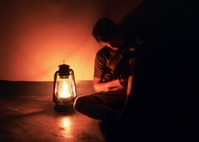
This year's winners have been announced, the overall winner was Neil Gupta, a fifth year student at Imperial College, London.
The theme was 'Medical Student Life, at Work, at Play'. The winner received a return flight to anywhere in the world.
The winner and runners up:


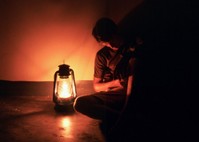
This year's winners have been announced, the overall winner was Neil Gupta, a fifth year student at Imperial College, London.
The theme was 'Medical Student Life, at Work, at Play'. The winner received a return flight to anywhere in the world.
The winner and runners up:

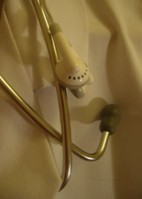

Tuesday, June 27, 2006
Mindshock: Transplanting memories?
I wonder if anyone saw this programme on Channel 4 last night. It reported a controversial theory that the heart may play a role in forming emotions, personalities and memories, based on the experiences of some heart transplant patients. This radical possibility clearly challenges the conventional textbook account of the heart as just a pump, and embraces the metaphorical vision of the heart which has featured in literature and the arts for centuries. The first person to report this was a heart transplant recipient in Boston twenty years ago who reported a sudden penchant for beer, green peppers and KFC nuggets, later found to be firm favourites of her young male donor. Strict confidentiality regulations meant that she could not have had access to this information, nor the name of her donor which she correctly gleaned from a dream.
However I wasn’t entirely convinced by some of the cases. One transplant patient who developed a love of classical music was found to have received a heart from an American violin-playing teenager. I couldn’t help feeling that if the recipient had developed an interest in hip hop or rock, this too could have resonated with the donor’s musical interests. Another placid woman received the heart of a boxer, and subsequently reported violent tendencies. Again, it seems far too convenient to attribute this simply to the stereotype of a violent boxer. A particularly fanciful example was a man who became a prolific writer of poetry, only to receive a letter from his donor’s family containing lines of verse.
One thing seems apparent; the quagmire of confounding factors. Clearly a major medical procedure such as a heart transplant is likely to induce a degree of introspection and promote some lifestyle changes. Perhaps just the notion itself of having a heart transplant is sufficient to drive changes in personality, just as surviving a car crash may be life affirming for some, or traumatic for others. The effects of immunosuppressive medication in altering moods have also been implicated. However, this may not explain all of the reports, nor the finding that in a blinded study of 70 transplant patients that felt a change in personality, 10 matched their donors’ closely. The discovery of neuronal populations in the heart has also led to talk of a ‘little brain’ and ‘heart intelligence’, and the possibility that some memories may be stored in the heart. The last word finally went to a Prof Paul Pearsall, one of the strongest proponents of a sentient heart. Seemingly bursting from the pressure of keeping a lid on the puns for the last hour or so, he finally succumbs: ‘We better wake up and have a heart’.
However I wasn’t entirely convinced by some of the cases. One transplant patient who developed a love of classical music was found to have received a heart from an American violin-playing teenager. I couldn’t help feeling that if the recipient had developed an interest in hip hop or rock, this too could have resonated with the donor’s musical interests. Another placid woman received the heart of a boxer, and subsequently reported violent tendencies. Again, it seems far too convenient to attribute this simply to the stereotype of a violent boxer. A particularly fanciful example was a man who became a prolific writer of poetry, only to receive a letter from his donor’s family containing lines of verse.
One thing seems apparent; the quagmire of confounding factors. Clearly a major medical procedure such as a heart transplant is likely to induce a degree of introspection and promote some lifestyle changes. Perhaps just the notion itself of having a heart transplant is sufficient to drive changes in personality, just as surviving a car crash may be life affirming for some, or traumatic for others. The effects of immunosuppressive medication in altering moods have also been implicated. However, this may not explain all of the reports, nor the finding that in a blinded study of 70 transplant patients that felt a change in personality, 10 matched their donors’ closely. The discovery of neuronal populations in the heart has also led to talk of a ‘little brain’ and ‘heart intelligence’, and the possibility that some memories may be stored in the heart. The last word finally went to a Prof Paul Pearsall, one of the strongest proponents of a sentient heart. Seemingly bursting from the pressure of keeping a lid on the puns for the last hour or so, he finally succumbs: ‘We better wake up and have a heart’.
Monday, June 26, 2006
Purple Coat Club news
We were originally going to discuss Ian McEwan's novel "Saturday" on 6 July, which features a neurosurgeon as the main character. However, many people who'd expressed interest are away next month, so this will now take place on 10 August. Instead, we'll be watching the 1931 film 'Arrowsmith' on the 6th (next Thursday). Apologies to this year's medical humanities students who have probably seen this. The film is based on a book by Nobel-prizewinning author Sinclair Lewis. The story covers the medical career of Martin Arrowsmith, a flawed but well-intentioned protagonist who experiences medicine in many of its guises: as a research scientist, a pathologist, a public health official, an epidemiologist and a small-town GP. The novel is prescribed reading on many American medical humanities courses (but don't let that put you off!). You can read more about the film here.
We will be meeting in Rm 311, Mechanical Engineering Building, South Kensington campus, Imperial College London (no. 29 on this overly-complicated map). Everyone is welcome. We start at 19.30. Please e-mail me if you would like to come and are not a student or member of staff at Imperial so that I can arrange access to the building. Popcorn and wine will be on offer!
We will be meeting in Rm 311, Mechanical Engineering Building, South Kensington campus, Imperial College London (no. 29 on this overly-complicated map). Everyone is welcome. We start at 19.30. Please e-mail me if you would like to come and are not a student or member of staff at Imperial so that I can arrange access to the building. Popcorn and wine will be on offer!
Thursday, June 22, 2006
Art and Abortion
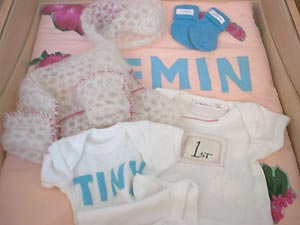
I have read AJ and Richard's post below with great interest. Inevitably, I turn to art to make sense of life. Tracey Emin famously appeared very drunk on TV and swore a lot before crying out 'I want my Mum', or words to that effect. Her work My Bed, strewn with used condoms and other debris, was berated by the popular press when it first appeared in the gallery. Emin continues to make controversial work, although she is now pretty mainstream with her own gallery in Tate Britain. Okay, I love Emin's work, so what's my point? My point is that all her work displays an amazing degree of fragility. This particular work, Tiny Emin, is no exception. It recalls the children she has aborted. In the context of the debate (below) on abortion the image says it all. Yes, the law has to protect the unborn child - and I believe it does that sufficiently well as it is. But it also has to protect the woman. Perhaps, as Richard suggests, there are some women who get rid of pregnancies without giving it a second thought. For the majority, however, I believe it is a decision they have to live with every day. Emin certainly does, as this work bears testimony. Emin exposes her self in her work so that the seemingly brash, narcissistic artist turns out to be nothing of the kind.
Wednesday, June 21, 2006
Abortion Debate
I've just been angered by watching the BBC News at Ten, and seeing the report on the abortion debate. The head of the Catholic Church in the UK has called for a decrease in the limit at which an abortion can be performed (currently 24 weeks). I find it frustrating that someone in such a position of responsibility can speak out so recklessly about such an inflammatory issue.
The Abortion Law in the UK has been established since 1967, and there is no real reason to bring the limit forward - i.e. no new evidence about foetal development or similar. There are currently no plans to change the Abortion Law, but it must be pointed out that most women who have abortions do so before 12-13 weeks, and only a small proportion go beyond 20 weeks. Although more foetuses now survive at 24 weeks, there is an association with long term problems - it's not all plain sailing.
Being a Pro-Choicer, I feel that the Cardinal concerned is ignoring the newer holistic approach to healthcare - that is, the biological, psychosocial and social factors that blend to create a healthy individual.
The Abortion Law in the UK has been established since 1967, and there is no real reason to bring the limit forward - i.e. no new evidence about foetal development or similar. There are currently no plans to change the Abortion Law, but it must be pointed out that most women who have abortions do so before 12-13 weeks, and only a small proportion go beyond 20 weeks. Although more foetuses now survive at 24 weeks, there is an association with long term problems - it's not all plain sailing.
Being a Pro-Choicer, I feel that the Cardinal concerned is ignoring the newer holistic approach to healthcare - that is, the biological, psychosocial and social factors that blend to create a healthy individual.
World Cup Injuries
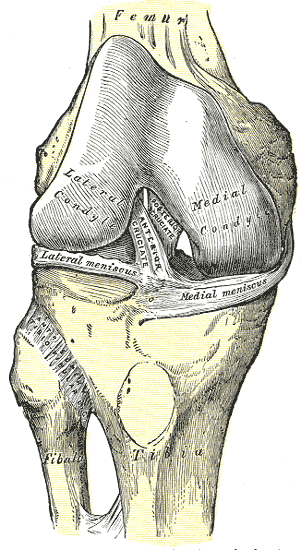
Watching the England match as part of the World Cup last night, I watched with concern as Michael Owen injured his knee in the first few minutes of the game. The pain and shock was clearly evident on his face during the many replays.
It turns out that he has ruptured his anterior cruciate ligament, which connects the front part of the upper tibia to the back part of the bottom of the femur.
His teammate Wayne Rooney recently fractured his right fourth metatarsal in the run up to the competition. Read an excellent Medical Student Newspaper article about it.
Subscribe to:
Posts (Atom)